Regional Wedding Pudding Traditions: Local Desserts to Honor Your Heritage
Ask three families what belongs on a wedding table and you will get three different answers. Ask about pudding and the answers get longer, not shorter. Long before tiered cakes and dessert bars, weddings were marked with a bowl of something sweet and shared: rice simmered in milk, wheat berries with honey and nuts, a steamed suet pudding dark with dried fruit. These desserts were cheap enough to feed a village and rich enough to feel like an occasion, which is exactly why so many of them are still made today.
Why Pudding Still Belongs at a Wedding
Pudding has three practical advantages over a plated dessert. It usually cooks in one big pot, so it scales to a crowd without extra hands. It often tastes better made a day or two ahead, which is rare and precious in wedding week. And it is spoonable — easy for a grandmother, a toddler, and a guest balancing a plate on their knee.
There is a symbolic layer too. Grain, milk, honey and dried fruit have long stood for abundance and good wishes. A pudding carries a family name as much as a flavour: "Nonna's pudim," "the kheer Aunty always makes." That is hard to buy from a caterer, and it is the reason a heritage dessert usually outshines whatever is trending on dessert tables.
Britain, Ireland and the Steamed Pudding Belt
Older British cookery books list a wedding pudding alongside the cake: a suet pudding, close to a Christmas pudding, steamed for hours and served with custard, cream or brandy butter. In Ireland, the same pudding family shows up with sherry and stout. Scotland brings shortbread, Dundee cake and black bun, a dense fruit-filled pastry traditionally eaten at New Year but often on celebration tables too. Cornwall has its bride's pie, a sweet two-crust pie that some families still bake for weddings.
Some families bake a charm into the pudding — a ring, a coin, a thimble — so each slice carries a small fortune. If you do this, tell your guests and your caterer first, and choose something large enough that nobody bites down on it.
Northern Europe: Rice, Almonds and Towers of Almond Cake
Scandinavia's wedding-table pudding is rice. Danish risalamande and Norwegian riskrem are cold rice puddings folded with whipped cream and vanilla, served with a warm cherry or red berry sauce. A single whole almond is hidden in the bowl; whoever finds it traditionally receives a small gift. It is a gentle, generous ritual that works beautifully at a reception, especially if you keep a few extra prizes on hand for the inevitable second bowl.
- Norway: kransekake, a tower of stacked almond rings, often decorated with flags or small crackers.
- Denmark: kransekage, the same idea in a slightly different form, plus marzipan ring cakes.
- Sweden: ris à la Malta, rice pudding with orange and cream.
- Poland: makowiec, a poppy seed roll, and kutia, wheat berries with poppy seeds, honey and nuts.
Many of these contain alcohol, cream or nuts — worth flagging on a menu card if you are serving them buffet-style.
The Mediterranean and the Middle East
Greek weddings often close with koufeta, the white sugared almonds handed out in odd numbers as favours, and a sweet table of baklava, galaktoboureko (semolina custard in filo) and honey-soaked loukoumades. In Italy, Sicily's cassata and cannoli do the work, alongside struffoli — small honey-glazed dough balls piled into a mound.
Across Lebanon, Syria and Palestine, knafeh is the celebration dessert: shredded pastry over soft cheese, soaked in syrup and served warm. Ma'amoul, date- or nut-filled semolina cookies, travel well and make lovely favours. Armenian families serve anoushabour, a wheat berry pudding with dried fruit and nuts, sometimes called Noah's pudding. Lebanese muhallabia, a simple milk pudding with rose water, is a quieter option for guests who find syrup-heavy sweets too much.
South Asia: Kheer, Payasam and Sweet Curd
Rice pudding is the thread running through South Asian wedding sweets. North Indian kheer is rice slow-cooked in milk with cardamom, saffron and pistachio. In Kerala and Tamil Nadu, payasam is served at the end of the sadya, with palada pradhaman — rice ada in sweetened milk — reserved for the most formal occasions. Bengali weddings finish with mishti doi, caramelised sweet yoghurt, and sandesh.
Other sweets to consider: halwa in its many regional forms, kulfi on sticks for a summer reception, and falooda as a late-night serve. At Sikh weddings, karah prasad is shared in the gurdwara as a religious offering rather than a dessert course — treat it with respect and serve your chosen pudding separately at the reception.
East and Southeast Asia: Sweet Soups and Steamed Cakes
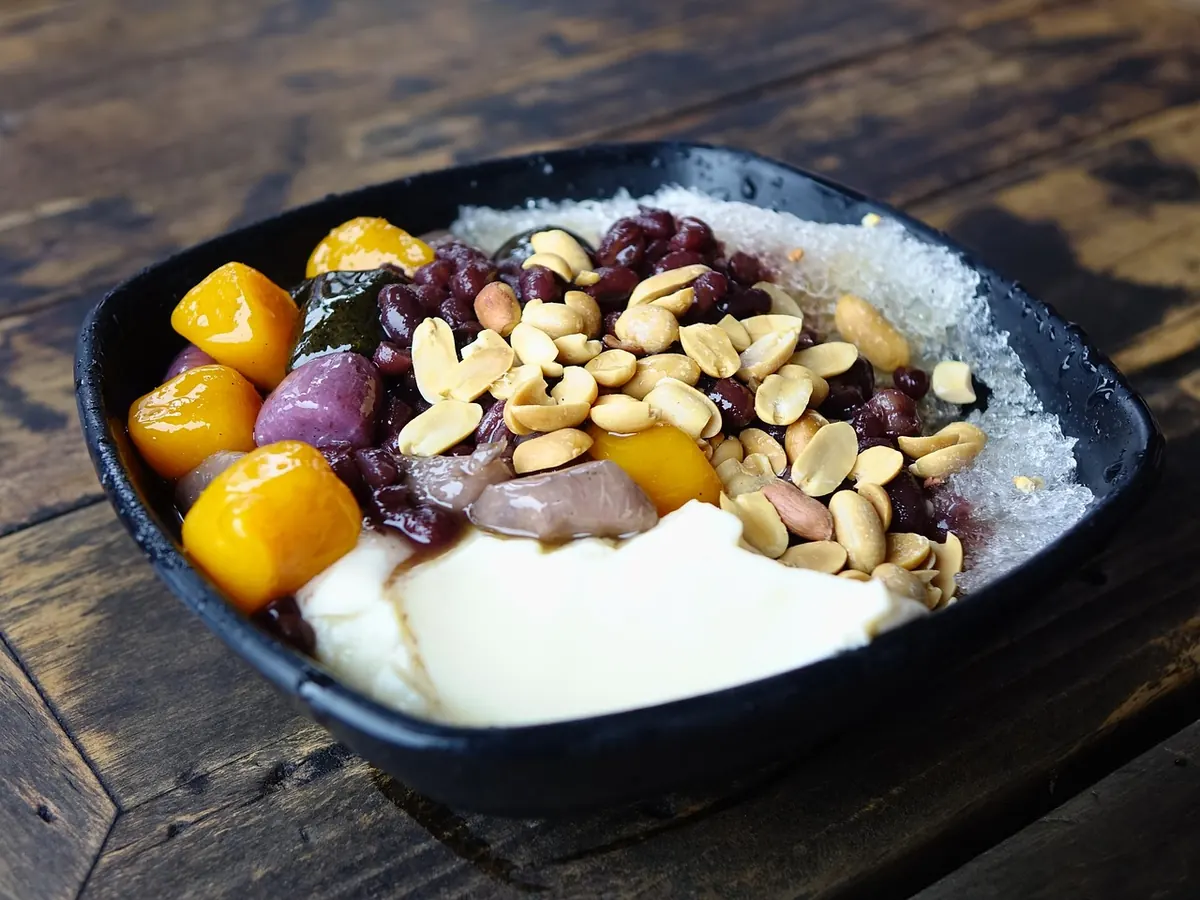
A Cantonese banquet traditionally ends with tong sui, a sweet soup: red bean, black sesame, sweet almond, or mango with pomelo and sago. Double-boiled papaya with snow fungus is a gentler finish, and sesame balls, egg tarts and tang yuan all suit a shared dessert table. Filipino celebrations lean on leche flan, buko pandan and ube halaya. Korean weddings might put out tteok, chewy rice cakes, and yakgwa, honey cookies.
The Americas and the Caribbean
Caribbean black cake is the heavyweight: dried fruit soaked for weeks, baked into a dark, rum-soaked pudding-cake and cut into small squares because a little goes a long way. Jamaica also has matrimony, a soft dessert of star apple pulp with orange segments and condensed milk — the name says everything.
In the American South, banana pudding has quietly become a wedding staple, layered with vanilla wafers and meringue. Mexican and Mexican-American families serve arroz con leche, cinnamon-scented bread pudding called capirotada, or tres leches. Brazilian weddings usually end with pudim de leite condensado, a dense caramel-topped flan, plus trays of brigadeiro chocolate truffles.
Blending Two Families' Traditions
- Pick one hero dessert per side. Two puddings, clearly labelled, beat a table of twelve half-hearted options.
- Get the recipe in writing now. Cook it once with the person who knows it, and write down the amounts they never measure.
- Decide who cooks. Aunties who want to help usually want a defined job — a tray, a sauce, a garnish — not vague offers.
- Test the scale. A recipe for eight rarely multiplies cleanly to eighty. Try a triple batch before the wedding.
- Write a two-line card for each dessert. Name, origin, and one sentence about whose recipe it is. Guests read these, and they remember them.
Practical Notes for the Day
Work out your timing first. Steamed puddings, kheer, black cake and pudim all prefer to be made ahead; rice puddings with whipped cream and anything with fresh fruit do not. Ask your caterer or venue what refrigeration and reheating they can offer, and confirm whether they will plate and serve a dessert you have brought in — many will, for a fee, but you need permission in writing.
Then handle the safety side. Nuts, dairy, gluten and alcohol appear in nearly every pudding on this list, so label everything clearly and keep a nut-free alternative separate, with its own serving spoon. If a recipe contains raw egg or a heavy pour of spirits and you are serving pregnant guests, children or anyone avoiding alcohol, offer a second option. For guests with serious allergies, ask them directly what they need rather than guessing, and speak to your caterer about cross-contact.
Finally, keep portions small. These desserts are rich, and a two-bite serving of black cake or knafeh will please far more guests than a full bowl. If you want the tradition to carry into the next generation, the recipe card matters as much as the pudding — write it out, and hand it to someone young.
Photo: cegoh / Pixabay